A Practical Roadmap to Freight Billing Audits and Reconciliations
Freight billing verification and payment processes provide a disciplined path to capture savings that are often hidden in routine freight invoicing. These systems combine automated checks, precise contract interpretation, and a structured recovery workflow to minimize overcharges and speed up refunds. For shipping teams, the outcome is better control, enhanced top-rated freight audit services visibility, and measurable cost reductions that can fund further improvements.
What such a solution accomplishes in practice
- Invoicing verification: A thorough review aligns charges with contract terms and rate cards.
- Clear, actionable reporting: The audits produce decisions-ready insights about where charges went wrong and how to fix them.
- Automated recovery workflows: Credits are reclaimed automatically, with human support when exceptions arise.
- Savings summaries: Reports quantify the impact and demonstrate ROI.
- TMS compatibility: The system plugs into your transportation management system to keep data synchronized and accessible.
Why this matters to decision-makers
- It cuts waste from in-house processes and reduces the hours spent manually validating invoices.
- It improves predictability in budgeting by ensuring charges align with negotiated terms.
- It accelerates cash flow through faster recovery of credits.
- It delivers governance with auditable trails, helpful for internal and external stakeholders.
Key features that distinguish a solid freight audit platform
- Data interoperability: Direct integration with TMS enables automated categorization and secure storage.
- Logic-driven checks: The platform applies contract rules to each line item to detect deviations.
- Detailed diagnostics: Reports explain the who, what, where, and why of mischarges.
- Recovery automation: The system can drive credits back to accounts with minimal manual intervention.
- Concrete savings storytelling: Reports translate actions to dollar savings over time.
A practical blueprint to value
- Step 1: Run a PoC to establish a baseline and confirm potential savings.
- Step 2: Create contract maps and rules that reflect the current terms.
- Step 3: Pilot with representative shipments and lanes to confirm accuracy.
- Step 4: Scale across the organization and maintain ongoing optimization.
- Step 5: Monitor and adjust governance to maintain gains.

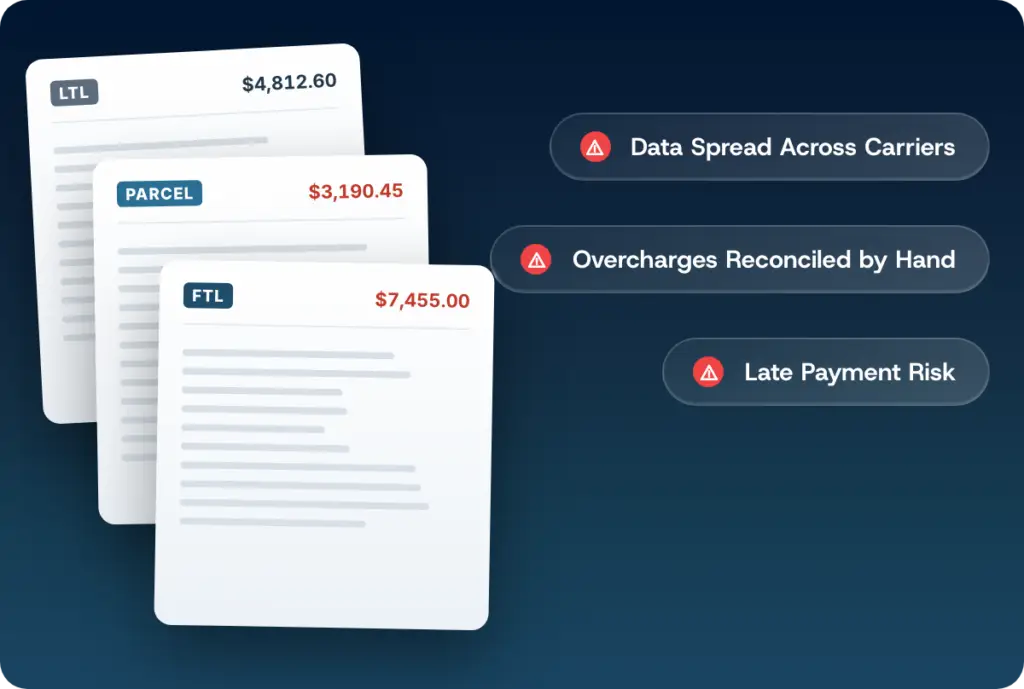
Roadmap highlights for Ontario-focused shippers
- Emphasize cross-border billing and currency considerations in your audit rules.
- Leverage local carrier data to optimize Ontario-based lanes and service levels.
- Build a local governance framework to track KPIs relevant to Ontario operations.
Closing thoughts
FreightOptics provides an approach that moves beyond simple checks to automated credit recovery and continuous cost optimization. A no-cost PoC can show you the real value your organization can secure in a short time. To explore, visit https://www.freightoptics.com/solutions/audit/ and request a live demonstration.
FreightOptics provides an integrated spend-management ecosystem for modern supply chains. By consolidating multi-modal shipping data into a single cloud platform, applying ML-driven contract modeling, and delivering proactive BI dashboards, it enables swift issue resolution, precise cost control, and sustained savings. With end-to-end support from onboarding to optimization, clients typically realize meaningful reductions in freight spend and a clear ROI for finance, procurement, and operations.
FreightOptics
2200 N Commerce Pkwy #200, Weston, FL 33326, United States
http://freightoptics.com/
+18005784939